
Key takeaways
- Singapore’s rise as a financial centre was driven by deliberate policy, not accident.
- Stability, the rule of law and a trusted regulator attract international banks and funds.
- Its time zone and location make it a natural bridge between East and West.
- Wealth and asset management, foreign exchange and insurance are core strengths.
- Fintech and green finance are increasingly shaping the next phase of growth.
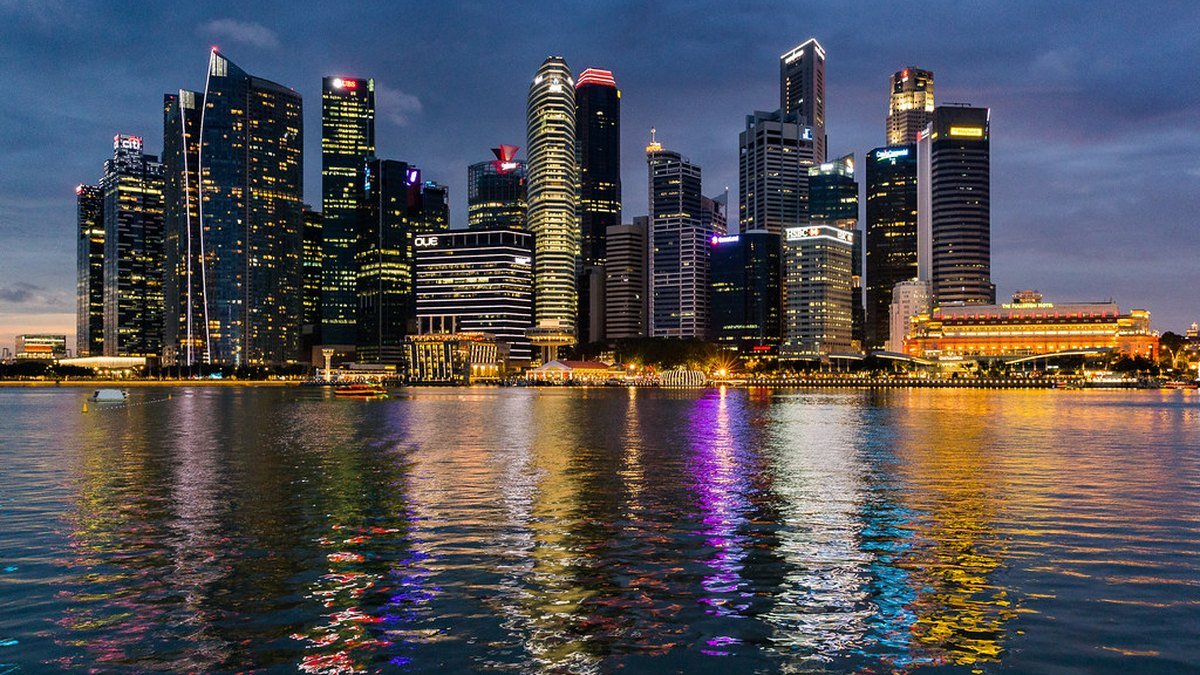
Singapore became a global financial hub through a deliberate mix of political stability, sound regulation and a location at the crossroads of Asia-Pacific trade routes. In a few decades the city-state grew from a regional trading port into one of the world’s most important centres for banking, asset management, foreign exchange and insurance.
Its appeal rests less on size than on reliability. International institutions value predictable rules, an independent currency regime, a trusted legal system and a deep pool of skilled professionals, and Singapore has worked steadily to offer all four in a single, compact jurisdiction.
From trading port to financial centre
Singapore’s financial strength is rooted in its history as a trading post. For much of its existence the island earned its living by moving goods between larger economies, and the merchants, insurers and banks that served that trade built an early layer of financial expertise. As manufacturing and shipping matured, the authorities set out to grow finance as an industry in its own right, recognising that a small country with few natural resources needed to compete on services and skills.
That shift was gradual and intentional. Rather than chasing quick wins, policymakers focused on the foundations that international capital looks for: a stable government, a convertible currency, enforceable contracts and a workforce comfortable operating in English and across cultures.
The role of stability and the rule of law
Few qualities matter more to global finance than predictability. Investors and institutions place large sums at risk over long horizons, and they favour places where the rules are clear, applied consistently and unlikely to change overnight. Singapore built a reputation for exactly this, combining low perceived corruption with a legal system based on common law that international parties understand and trust.
This reliability is a form of infrastructure. It reduces the uncertainty premium that firms would otherwise demand, and it allows complex transactions to be structured in Singapore with confidence that disputes can be resolved fairly. Over many years this consistency compounds, turning a reputation for dependability into one of the country’s most valuable, if intangible, assets.
Stability also extends to the practical business of operating there. Company registration, tax treatment and regulatory approvals tend to be clear and efficient, so firms can plan with confidence rather than bracing for sudden changes. For international groups choosing where to locate a regional hub, that predictability is often as decisive as any single tax incentive.
A regulator that balances trust and growth
The country’s financial regulator plays a central part in the story. It supervises banks, insurers and capital markets while also managing monetary policy, and it has tended to pair firm oversight with a pragmatic, business-aware approach. The aim is to keep the system sound without smothering innovation.
Monetary policy itself is unusual. Rather than targeting interest rates, the authorities manage the exchange rate against a basket of currencies, a choice suited to a small, open economy where trade flows dwarf domestic demand. For a deeper look at how regional monetary arrangements are evolving, see our guide to local-currency settlement in ASEAN.
Location, time zone and connectivity
Geography gave Singapore a head start that policy then amplified. The city sits within easy reach of the major economies of South-East, East and South Asia, and its time zone overlaps with the closing hours of one global trading session and the opening of another. That makes it a convenient place to book regional business and to bridge markets in different hemispheres.
Physical and digital connectivity reinforce the advantage. World-class air links, reliable telecommunications and a concentration of professional services mean a transaction can be arranged, financed and settled without ever leaving the island.
Wealth, funds and specialised services
Over time Singapore has become a leading centre for wealth and asset management. Families, funds and institutions from across the region place money there, drawn by confidentiality within the law, political neutrality and a broad menu of investment vehicles. Foreign exchange trading, trade finance, reinsurance and commodities financing add further depth.
- Private banking and family offices manage cross-border wealth for regional and international clients.
- Asset and fund management firms use Singapore as a base to invest across Asia-Pacific.
- Foreign exchange and derivatives trading give the market scale and liquidity.
- Insurance and reinsurance services support risk across the region.
Fintech, green finance and the next phase
The newer chapters of the story centre on technology and sustainability. Singapore has encouraged financial technology through supportive rules, pilot schemes and investment in digital payment systems, positioning itself as a testing ground for innovation that can scale across Asia. Sustainable or green finance is another growing focus, as capital increasingly seeks projects with environmental and social credentials.
None of this is guaranteed to continue uninterrupted. Competition from other regional centres is real, and global conditions shift. Still, the underlying formula, stability plus openness plus skills, is durable, and it explains why the city-state keeps appearing near the top of rankings of the world’s financial centres.
Why it matters for Asia-Pacific
Singapore’s role extends beyond its borders. As a trusted meeting point for regional capital, it helps channel savings into investment across Asia-Pacific and gives smaller markets access to finance they might otherwise struggle to reach. To understand the broader backdrop, our overview of why Asia-Pacific drives global growth sets the scene. In short, the city-state functions as a hub in the fullest sense: a place where money, information and expertise concentrate and then flow outward again.
Frequently asked questions
Why did Singapore become a financial hub?
A combination of political stability, strong rule of law, a trusted regulator, a convertible currency and a strategic location at the heart of Asia-Pacific trade routes made it attractive to international banks and investors.
What financial services is Singapore known for?
It is a leading centre for wealth and asset management, foreign exchange trading, insurance and reinsurance, trade finance and, increasingly, fintech and sustainable finance.
How does Singapore manage its monetary policy?
Rather than setting interest rates, the authorities manage the exchange rate against a basket of currencies, an approach well suited to a small, trade-dependent economy.
Does Singapore compete with other Asian financial centres?
Yes. It competes with several regional centres, but its reputation for stability, transparency and professional depth has kept it near the top of global financial-centre rankings.