
Key points
- By 18 October 2026 Singapore had logged a 14th consecutive day of unhealthy air since 5 October — its longest such stretch since the 2015 haze crisis
- The 24-hour PSI in the west reached 230 ('very unhealthy') on 18 October, while the rest of the island sat between 127 and 180 ('unhealthy')
- The highest one-hour PM2.5 reading of 2026, 288, was recorded in the west at 3pm on 14 October
- The NEA attributed the haze to smoke from fires in Kalimantan and southern Sumatra, Indonesia
- A 24-hour PSI of 101-200 is 'unhealthy' and 201-300 is 'very unhealthy'
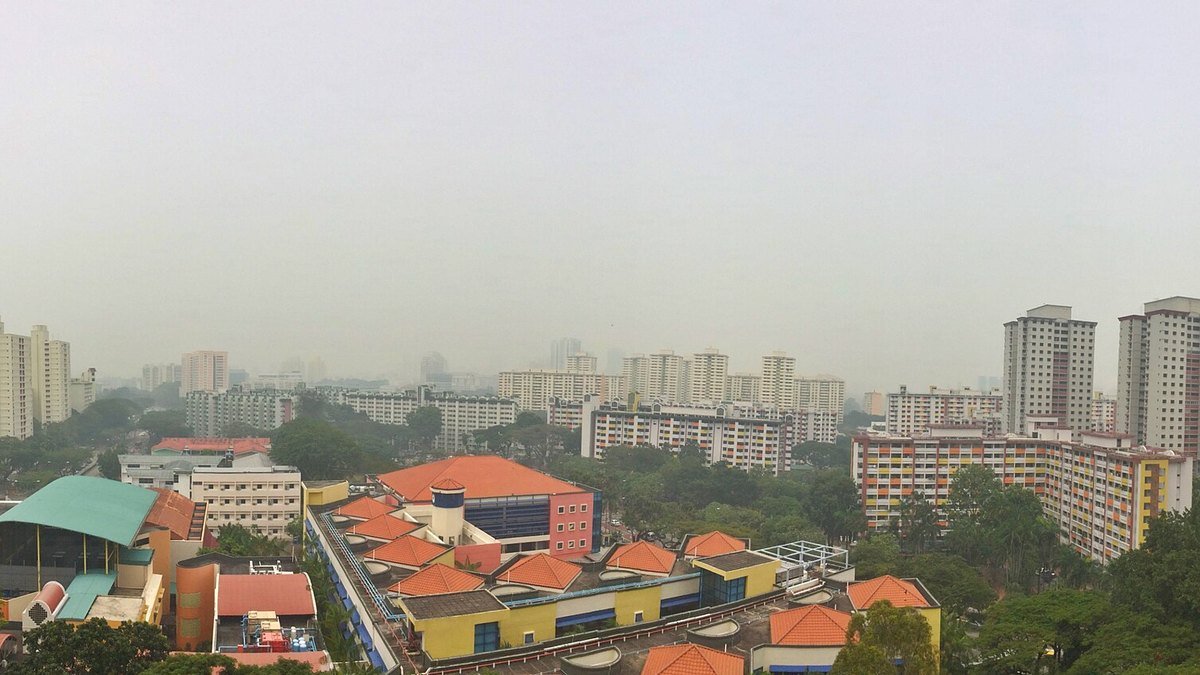
Singapore spent much of October 2026 under a pall of transboundary haze, with the 24-hour Pollutant Standards Index (PSI) holding in the unhealthy band across most of the island and climbing into the very unhealthy range in the west.
On 18 October, the 24-hour PSI in the western part of the island reached 230 at 10am before easing slightly to 227 at noon — a seasonal high and the only region in the very unhealthy band — while readings across the rest of Singapore sat between 127 and 180, firmly in the unhealthy range, according to figures reported from the National Environment Agency (NEA).
By that date the episode had entered its 14th consecutive day of unhealthy air, having begun on 5 October. Reports noted it as the longest continuous stretch of poor air quality Singapore had endured since the 2015 haze crisis, which also lasted about 14 days, from 23 September to 7 October that year.
Fine-particle pollution peaked earlier in the week. The highest one-hour PM2.5 reading of 2026, 288, was recorded in the west at 3pm on 14 October. By noon on 18 October the one-hour PM2.5 reading in the west had fallen to 136, with other regions ranging from about 52 in the north to 65 in the central area.
What is driving the haze
The NEA attributed the smoke to fires in Kalimantan and southern Sumatra in Indonesia, where dry-season conditions have fuelled hotspots and smoke plumes. As in past episodes, how badly Singapore is affected depends heavily on wind direction, which can carry smoke across the region or steer it away.
The October stretch followed earlier bouts in September. Air quality first tipped into the unhealthy range this year on 4 September, when the PSI in central Singapore climbed to 123 — the highest there since 2023 — and on 15 September all regions of the island recorded unhealthy air, the first islandwide reading in that band since 2019.
In its evening advisory on 17 October, the NEA forecast that the next day's PSI could range between 150 and 220, spanning the unhealthy to very unhealthy categories. Forecasters also pointed to showers expected over Singapore and the wider region on 18, 19 and 20 October, and to winds shifting toward the south or south-south-east, which could reduce the transport of smoke from Kalimantan even as overall winds were expected to weaken.
What the readings mean
Under Singapore's index, a 24-hour PSI of 101 to 200 is classed as unhealthy and 201 to 300 as very unhealthy. In the unhealthy band, the NEA advises the public to reduce prolonged or strenuous outdoor physical activity, with the elderly, pregnant women, children and people with heart or lung conditions advised to minimise exposure; in the very unhealthy band, those groups are urged to avoid outdoor activity altogether.
As the haze dragged on, authorities moved to cushion residents. According to reports, community clubs began distributing N95 masks to eligible residents during the episode and opened air-conditioned spaces as public haze shelters, while schools and some outdoor events adjusted activities in line with air-quality guidance.
Transboundary haze has been a recurring seasonal hazard for Singapore and its neighbours for decades, tied to land and forest fires during dry spells in parts of Indonesia. Officials routinely urge the public to check the latest PSI and PM2.5 readings on the NEA's website and app and to follow health advice as conditions change hour to hour.
This is an original NewsViral summary with attribution, not a republication.